
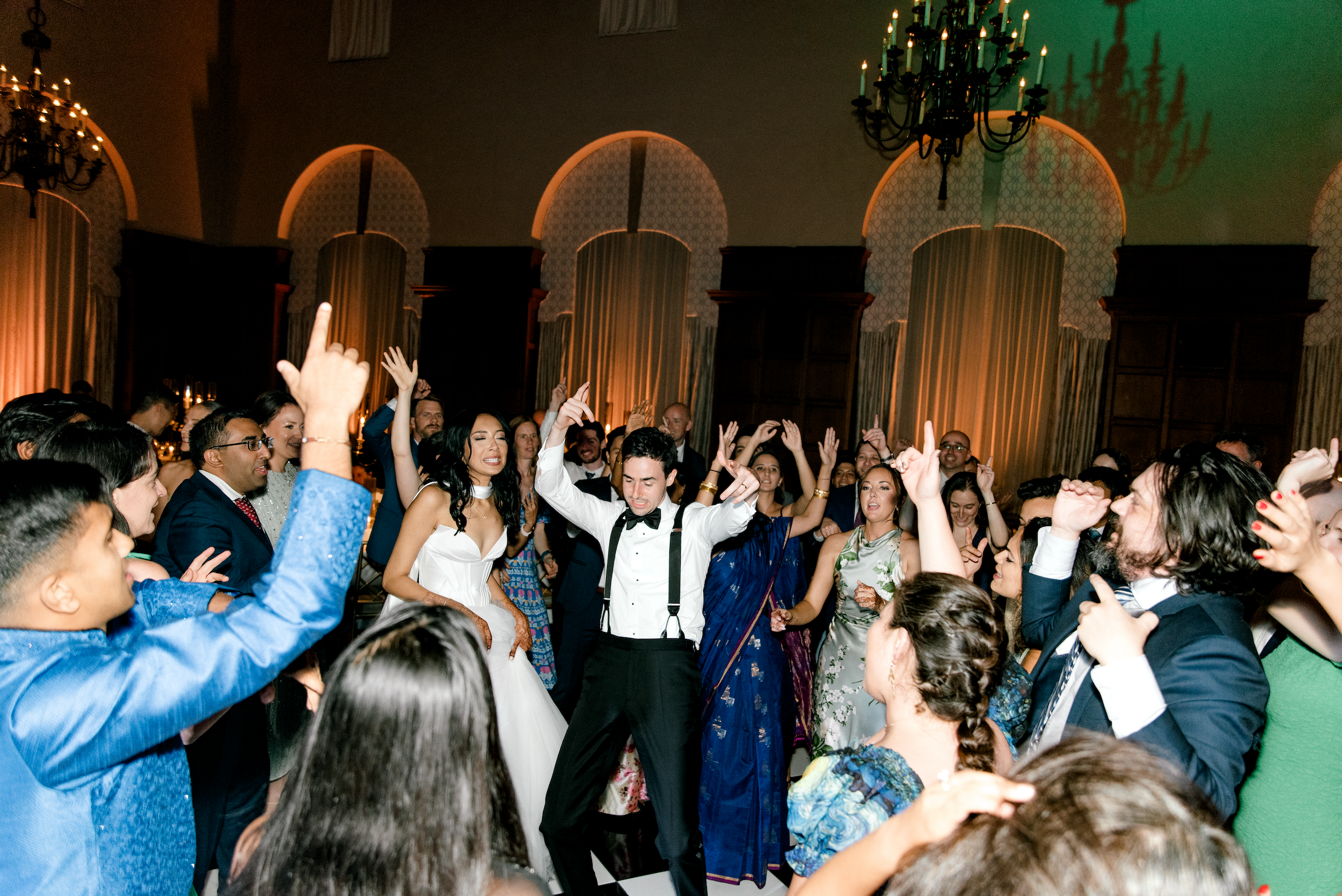
There’s a moment that happens on almost every dance floor I’ve played — weddings, festivals, community events, reunions — where something shifts. People who arrived as individuals begin to move as a group. Strangers start smiling at each other. Generations loosen up. Language fades into the background.
That moment doesn’t need explanation.
It’s rhythm doing what rhythm has always done.
Across cultures, movement has long been a way humans connect when words aren’t enough. Different steps, different sounds, different histories — but the same instinct to move together. Dance isn’t just expression. It’s participation. It’s presence. And in many ways, it’s one of the most honest forms of unity we still have.
Why Dance Works When Words Don’t
Dance doesn’t require translation. You don’t need to understand lyrics, customs, or traditions to feel a beat in your body. When people move together — even imperfectly — they’re sharing timing, energy, and attention. That shared rhythm creates connection without explanation.
Psychologists often talk about mirroring and synchronization — the way humans subconsciously align with one another through movement. You see it when people clap together, sway together, or step into a rhythm at the same time. It’s subtle, but powerful.
On a dance floor, no one needs to agree on anything. They just need to move.
Dance Floors as Modern Gathering Spaces
In a world where so much interaction is filtered through screens, dance floors remain one of the few places where people show up fully. No bios. No captions. No curated versions of themselves. Just bodies in motion.
I’ve watched it happen countless times. A wedding where families from different backgrounds hesitate at first — then slowly find their way onto the floor together. A festival crowd that starts divided into pockets, then merges into one collective wave of movement. A reunion where old stories resurface not through conversation, but through songs everyone remembers.
Dance floors are modern gathering spaces — places where people feel safe enough to be human together. They don’t erase differences. They make space for them.
Dance Cultures Around the World That Carry Joy and Identity
Every culture brings its own rhythm, history, and meaning to movement. These dances aren’t just about celebration — they’re about identity, resilience, storytelling, and belonging.
Bhangra & Punjabi Folk
Rooted in harvest celebrations, Bhangra is expressive, high-energy, and communal. Its movements are bold, joyful, and outward-facing — designed to be shared, not performed for an audience. You don’t need to know the steps to feel the energy. Once the dhol hits, the room responds.
Afrobeats & Afro-Dance
Afrobeats movement emphasizes groove, flow, and rhythm over precision. It invites individual expression within a collective space. People dance with the music, not on top of it — which makes it incredibly inclusive and freeing.
Latin Dance (Salsa, Reggaeton)
Latin dance styles thrive on connection — whether between partners or within a group. There’s constant communication through movement, timing, and feel. It’s expressive without being intimidating, rhythmic without being rigid.
Hip-Hop
Born from storytelling and community, Hip-Hop dance allows people to move authentically and individually while still sharing space. It’s rooted in self-expression but thrives in circles, cyphers, and shared energy.
K-Pop & Pop Choreography
Precision and synchronization define many pop and K-pop dance styles. There’s unity in repetition — people learning the same steps, moving together, and participating in something larger than themselves.
Country Line Dancing
Structured, welcoming, and communal. Line dancing invites participation without pressure. Everyone faces the same direction, follows the same steps, and moves together — a perfect example of how structure can create inclusion.
Arab Dance & Circle Traditions
Across Arab cultures, music and movement often center around the circle — a symbol of unity, equality, and collective energy. Whether it’s Dabke or other regional dances, the emphasis is on shared rhythm, grounded steps, and community participation. No one stands alone. Everyone contributes.
Different cultures. Different movements.
The same instinct to come together through rhythm.
What All These Traditions Share
Despite their differences, these dance cultures have a lot in common:
Rhythm-driven movement
Call-and-response patterns
Repetition and flow
Group participation
Emotional expression through the body
These elements lower barriers. They invite people in rather than push them out. And they create a sense of belonging that doesn’t depend on background, language, or experience.
At their core, these dances aren’t about being perfect. They’re about being present.
DJs as Translators of Rhythm
A DJ’s role in these spaces isn’t just to play music — it’s to translate energy. To read a room. To understand when to shift, when to hold, and when to let people settle into a moment.
At multicultural and multi-generational events, that role becomes even more important. It’s about honoring traditions while creating space for something shared. About knowing when to introduce a new rhythm and when to let familiarity carry the moment.
When done thoughtfully, transitions between genres don’t divide a room — they connect it. People recognize pieces of themselves in the music, even if it isn’t “theirs.”
That’s where unity happens.
Why Unity Through Rhythm Matters Right Now
Modern life is fragmented. People are more connected digitally, yet often more isolated emotionally. We scroll, swipe, and react — but rarely move together.
Dance interrupts that. It brings people into the same moment, the same tempo, the same physical space. It asks for presence, not performance.
In a time when differences are often highlighted, rhythm reminds us of something simpler: we all respond to movement. We all feel music in our bodies. We all need spaces where joy is shared.
The Dance Floor as Common Ground
Dance floors don’t solve the world’s problems. But they do something just as important — they remind us what connection feels like.
Different steps.
Different cultures.
Different stories.
One rhythm.
And when people move together — even briefly — they remember that unity isn’t something you argue for. It’s something you experience.
That’s the power of rhythm.
And that’s why the dance floor will always matter.
If you liked this article and would like to learn more about Sondhi Sounds, click below to join our community or book a call with us today.
